

In this article:
Most senior designers were shielded from defining strategy — and never realized it
The 2026 hiring market is exposing that gap: 56% of companies are hiring senior talent, but for a different kind of senior
Unshielding is a practice, not a course — and it starts before the brief arrives
I remember the exact meeting.
It was a product strategy session — the kind where the PM gathers stakeholders before design begins. I’d been a designer for almost a decade. I had the title, the track record, the confidence. When the room turned to me and asked what I thought the experience strategy should be, I had an answer ready.
Halfway through delivering it, something shifted.
I wasn’t drawing from strategy. I was drawing from the brief the PM had handed me the week before.
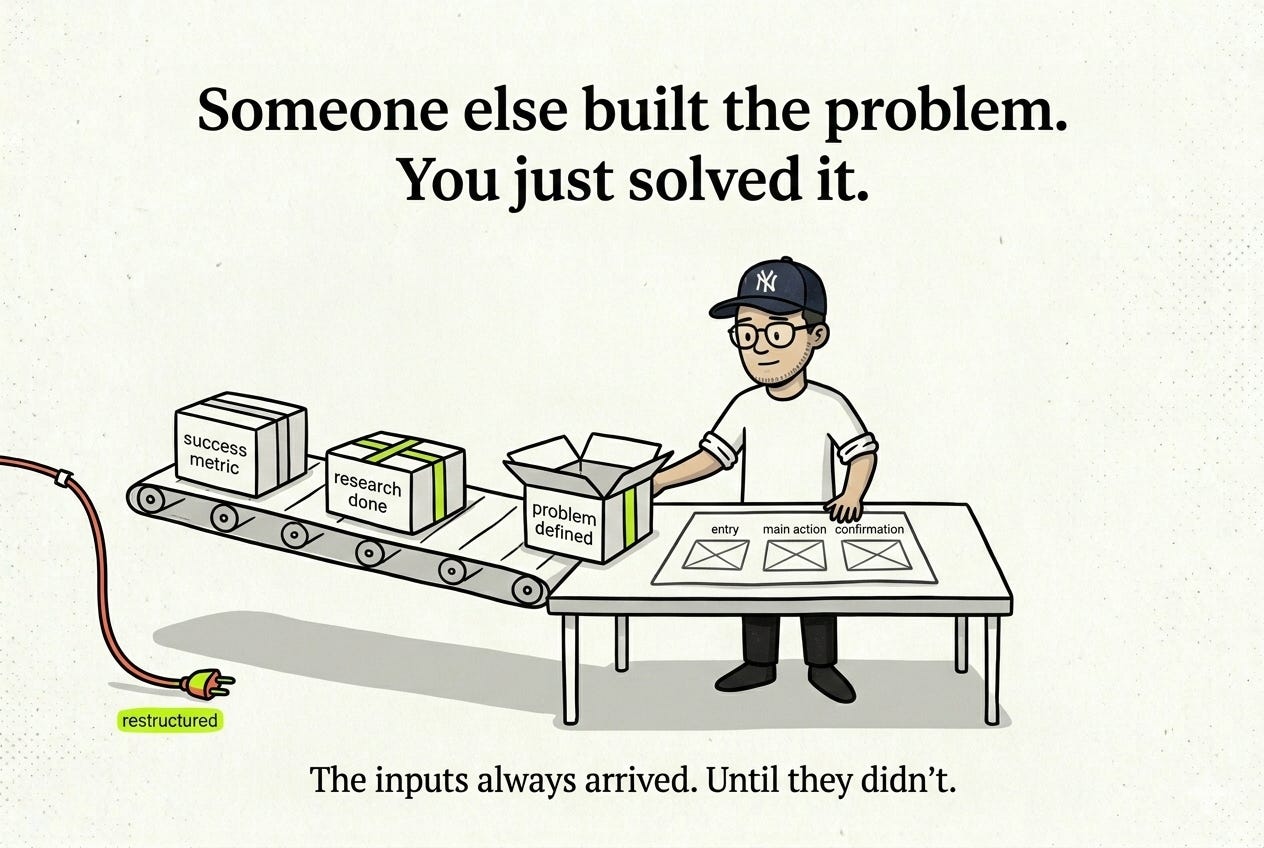
I had shaped the ideas. Pushed back on some things, refined others, added nuance. But the original frame — the business problem, the customer segment, the success metric — none of that was mine. It had been handed to me. And I had been so good at working within frames that I’d confused frame-working with frame-setting.
That’s what being shielded feels like from the inside. It doesn’t feel like a limitation.
It feels like seniority.
What “shielded” actually means
Design recruiter Tom Scott has spent the past year talking to hiring managers across product companies at every stage. His observation, published this February, is uncomfortable:
“Most designers are more shielded than they realize.”
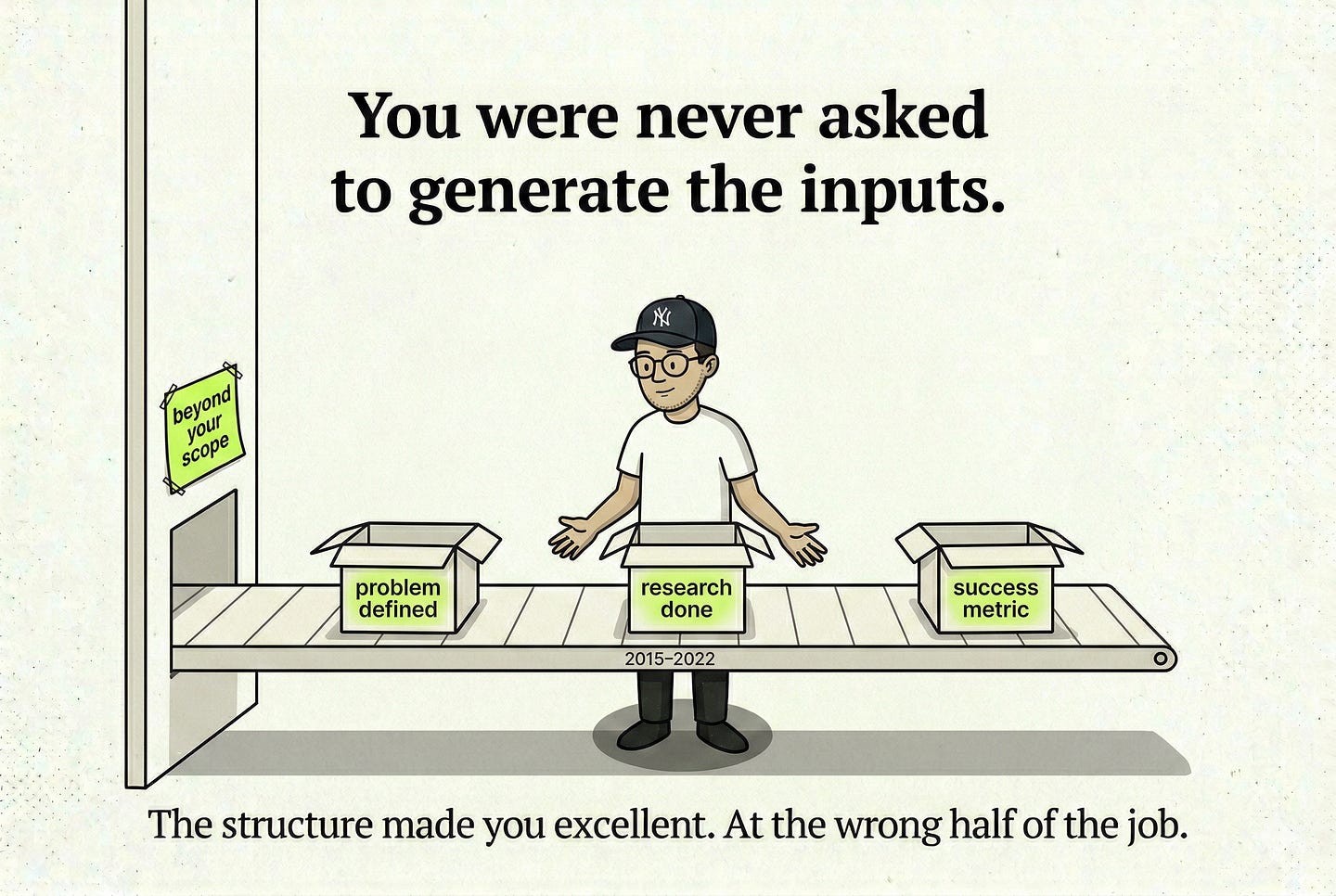
He’s not being critical. He’s describing a structural reality of how product teams were built for nearly a decade. PMs defined the problem space. UX researchers translated user behavior into insight. Engineers flagged technical constraints. Designers sat at the intersection — receiving well-organized inputs and converting them into considered outputs.
That was the job. If you were good at it, you got promoted and given harder intersection problems.
You were never asked to generate the inputs.
This isn’t a failure of education or ambition. It’s a consequence of how design was institutionalized. When companies scaled design teams in the 2015–2022 era, they built structures that insulated designers from business ambiguity. The theory was that protected designers produced better work. There’s evidence that was often true. But there’s a difference between a structure that protects quality and one that protects designers from developing certain capabilities entirely.
The capabilities that got protected away? Defining which problems are worth solving. Connecting design decisions to revenue without a translator. Walking into a room with competing stakeholders and leaving with a direction — not just notes.
These aren’t craft skills. They have organizational skills.
For a significant portion of senior designers, they were simply never required.
The market moved before most designers noticed
The current hiring data makes the shift hard to dispute.
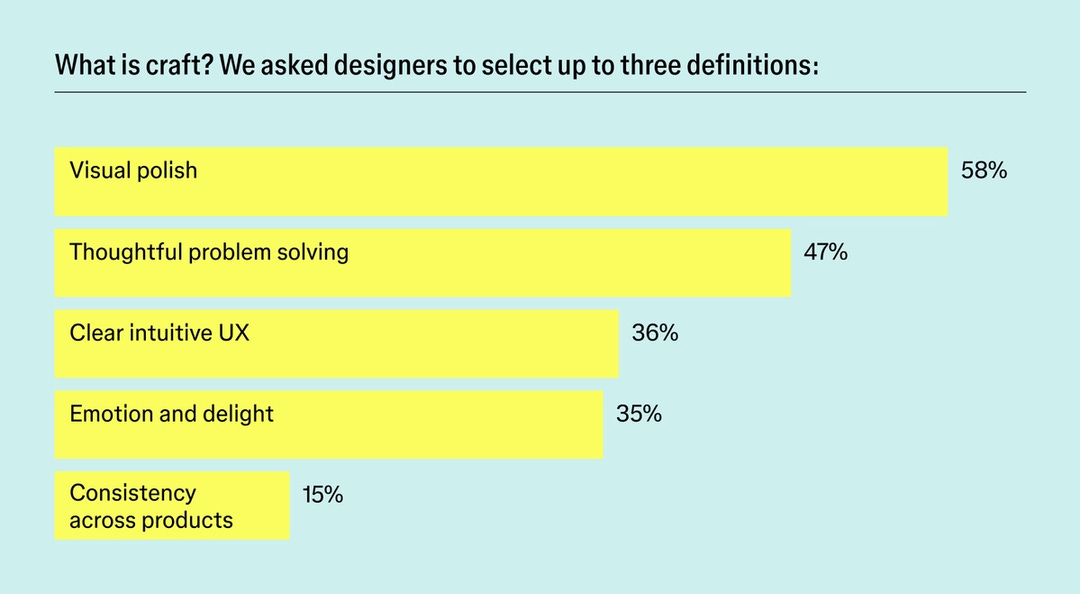
Figma’s 2026 State of the Designer survey — conducted across 906 designers and hiring managers — found that 56% of companies are hiring senior design talent, while only 25% are hiring junior. The gap isn’t about the pipeline.
It’s about what companies think design is for now.
They want designers who reduce organizational chaos. Not designers who require it to be reduced for them.
Tom Scott frames it directly: hiring teams aren’t looking for heroes. They’re looking for designers who create predictability under pressure. Heroes solve hard problems when conditions are right. Predictability means solving hard problems when the PM is missing, the research hasn’t been done, and the brief is a one-liner in Slack.
At the same time, UX research roles have been hit disproportionately hard. Analysis by Lawton Pybus at Quarter Inch Hole found researchers being cut at approximately three times the expected rate relative to other design functions. Google Cloud reportedly eliminated entire UX research teams below a certain seniority level. When the function that produced the insights feeding your design process is automated, compressed, or cut — you’re now expected to generate those insights yourself.
Or work without them.
Design didn’t become less important. The infrastructure designers depended on became less available.
What AI exposed — and what it didn’t cause
It’s tempting to frame this as an AI story.
It’s not, exactly.
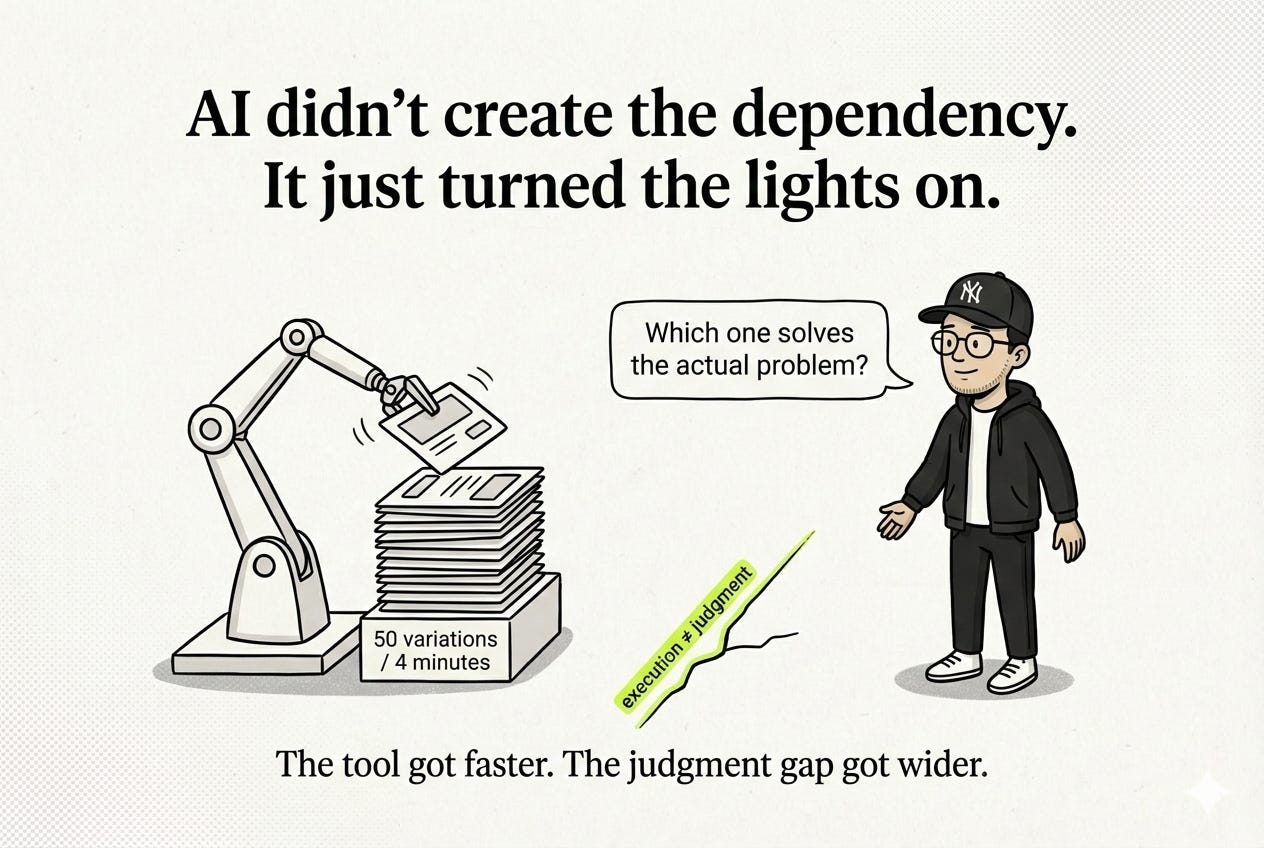
AI didn’t create the dependency on structured inputs. It revealed how deep that dependency ran.
When Figma released its AI features — Make, visual search, auto-layout generation — the immediate observation was that junior-level execution had become faster and cheaper. What followed, more quietly, was the recognition that the skills most senior designers thought protected them — polish, craft judgment, visual problem-solving — were precisely the skills AI handles reasonably well.
What AI cannot do is walk into a room with a VP of Product and an Engineering lead who disagree on the problem definition and help them arrive at a shared frame. What AI cannot do is recognize that the feature being requested is solving the wrong problem, and say so with enough organizational credibility that the team pauses.
Those aren’t tool skills. They’re earned through years of navigating ambiguity that most senior designers were protected from experiencing.
AI can generate 50 wireframe variations in minutes. It can’t tell you which organizational dynamic is making everyone too polite to name the real problem out loud.
That judgment — reading the room, the politics, the unspoken constraints — doesn’t come from craft. It comes from exposure to unstructured problems. Which is exactly what the shielded career path is limited.
The designers thriving right now are not the ones with the most polished portfolios. They’re the ones who developed independent thinking about problems before tools existed to shortcut the execution.
What unshielding actually looks like
Most articles get vague here, or prescriptive in ways that don’t hold up. So let me be specific.
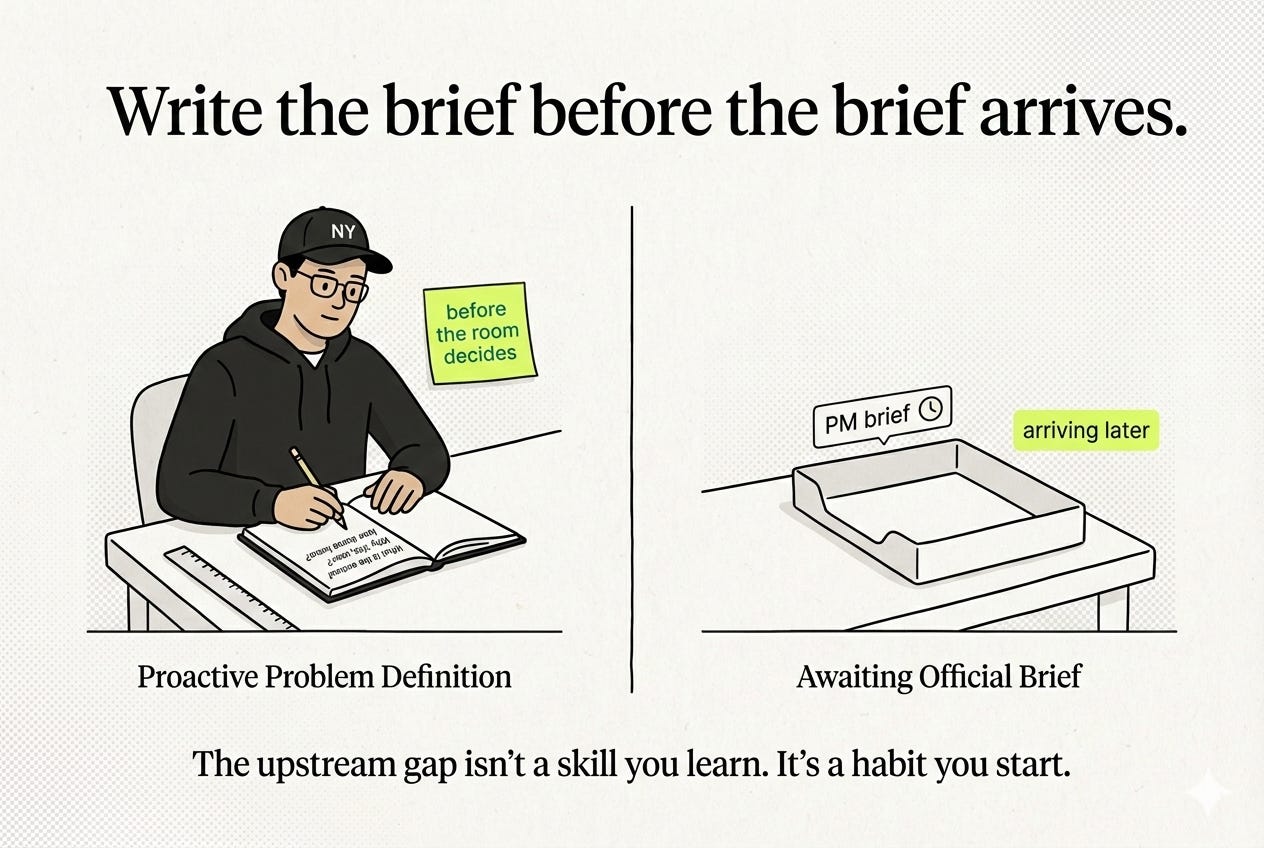
The first move is starting upstream. Unshielded designers don’t wait for the brief to arrive — they develop opinions about what the brief should contain before it’s written. Jeff Gothelf writes about this in the context of Lean UX: the designer who participates in assumption mapping before user research isn’t just more effective — they’re irreplaceable in a way that the designer who receives research outputs is not.
The second is translating work into outcomes without a PM doing it for you. NN/g’s State of UX 2026 is direct: surface-level design work that can’t be connected to measurable impact is no longer a defensible role. This doesn’t mean becoming a data analyst. It means being able to say what changed in user behavior as a result of your decisions — and being right often enough that people trust the claim.
The third is tolerance for organizational friction. The structured-team model protected designers from stakeholder misalignment, competing priorities, and unclear ownership. Don Norman has written about design as creating plans to change existing situations into preferred ones. The “existing situation” increasingly includes the organizational dynamics — not just the interface.
None of this requires abandoning craft.
It requires extending where your accountability starts.
The seniority paradox
Here’s the uncomfortable part most hiring discussions avoid.
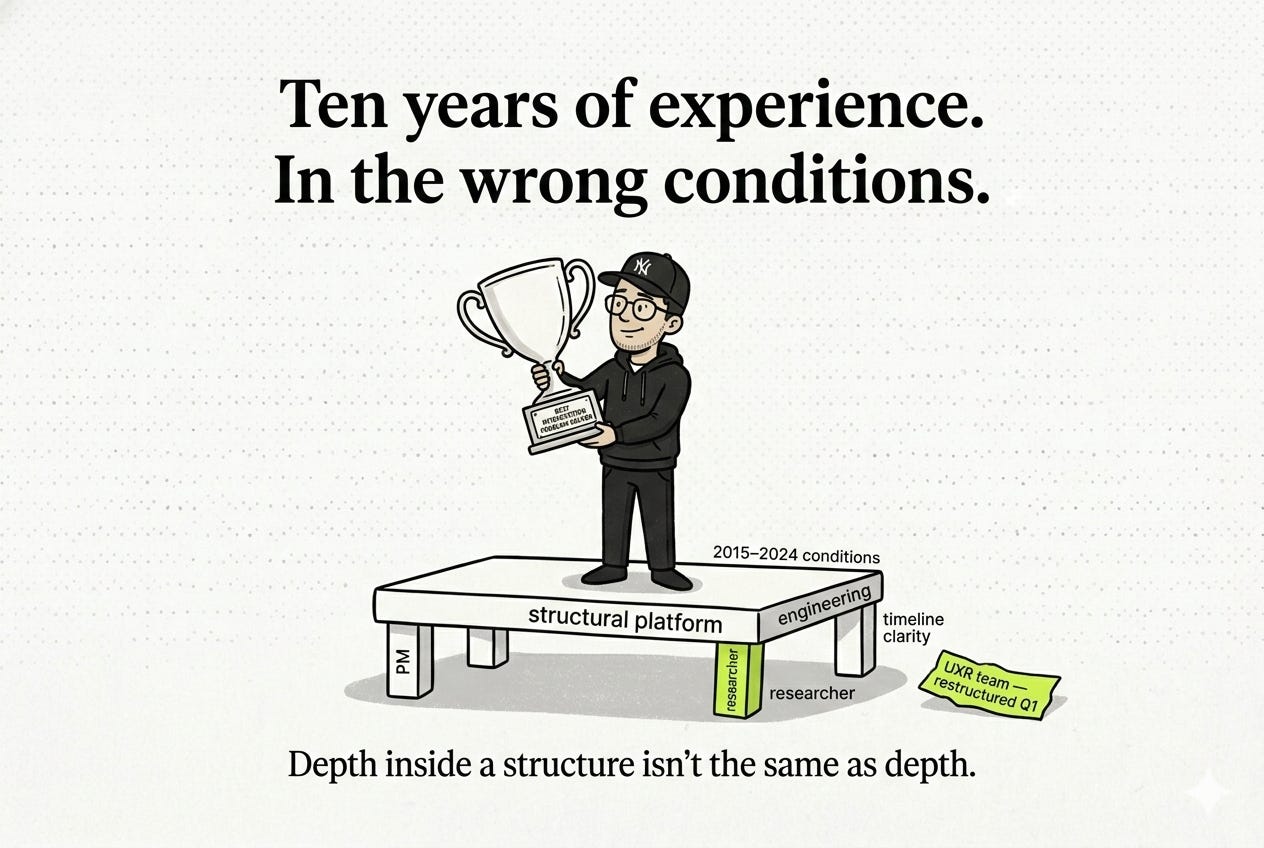
The designers who are least employable right now are often the ones with the most experience in well-functioning teams. Because well-functioning teams made shielding invisible. Ten years inside a structure where the PM was excellent, the research was thorough, and the engineering was collaborative doesn’t prepare you for what’s increasingly common: a team of three, an ambiguous mandate, and a six-week runway to move a metric.
Authentic Jobs’ 2026 hiring guide found that the median time to offer has risen to 68.5 days — up 22% from the previous year. The funnel is narrower. The reason isn’t that companies don’t want designers.
It’s that they’re looking for a specific kind of designer and finding fewer than expected.
Candidate volume is high. The match rate is low.
Seniority, in the old sense, was earned through depth inside a structure. The market is now paying for a different kind of depth — one built through exposure to the parts of product work that most structured teams never let designers touch.
What changes when this becomes the baseline
This isn’t just an individual career problem. It’s a profession-level reckoning.
If the designers who thrive going forward are the ones who developed independent strategic capability — either because their teams required it, or because they sought it deliberately — then the profession needs to reckon with how it trains people. The junior-to-senior pipeline built around structured teams, defined handoffs, and protected design zones produced excellent practitioners for that environment.
That environment is compressing.
NN/g’s State of UX 2026 makes the direction clear: design practices that remain focused on artifact production, rather than strategic problem framing, will be increasingly difficult to justify at the organizational level. The designers who differentiate treat UX as infrastructure for decision-making, not a deliverable at the end of a defined process.
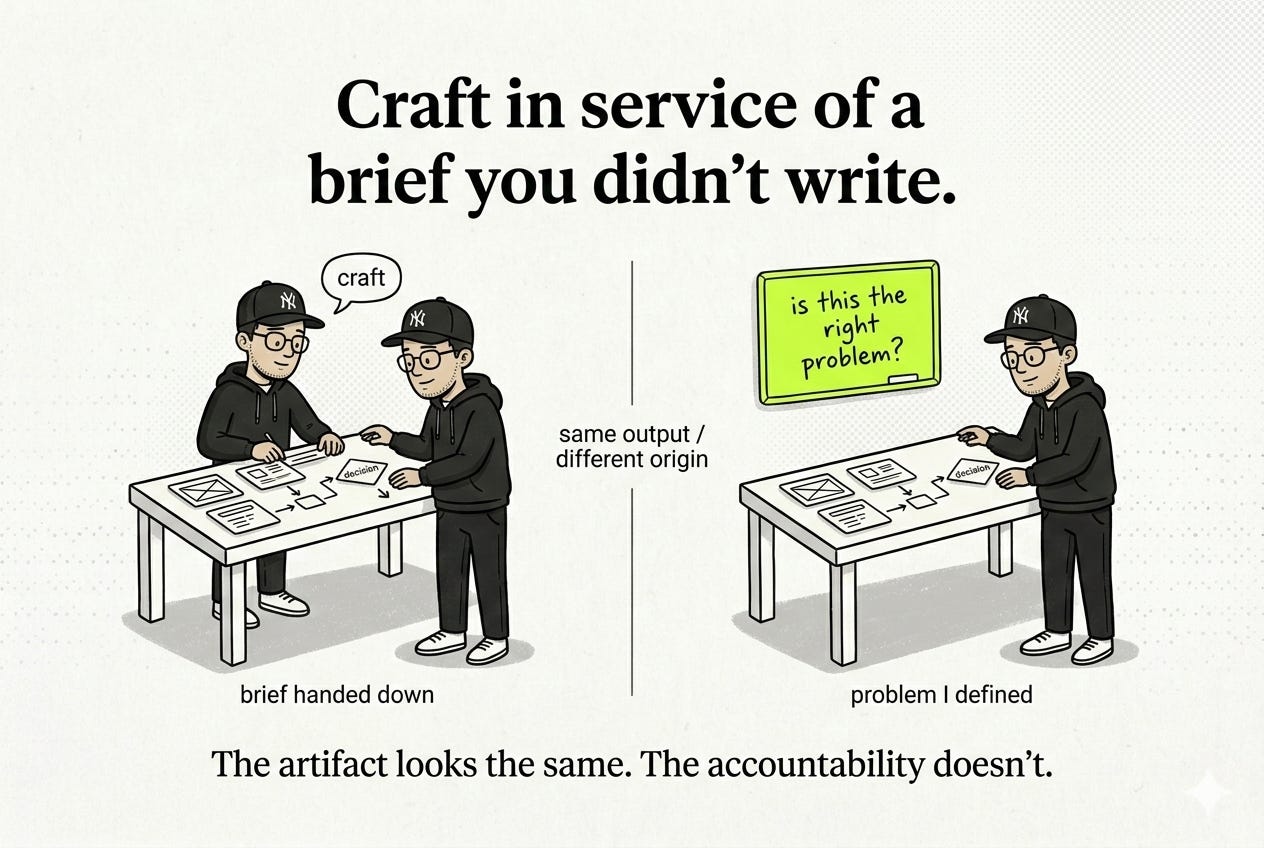
Craft still matters. More, arguably, because AI has raised the floor on what “acceptable” looks like at low cost. But craft in service of strategy you helped define is a completely different practice from craft in service of strategy handed down from above.
The shielded career was real. The skills it produced were genuine.
The question is whether those skills include the ones the market now needs most.
For many senior designers — myself included — the honest answer is: partially.
And partially is no longer enough.
Your action plan
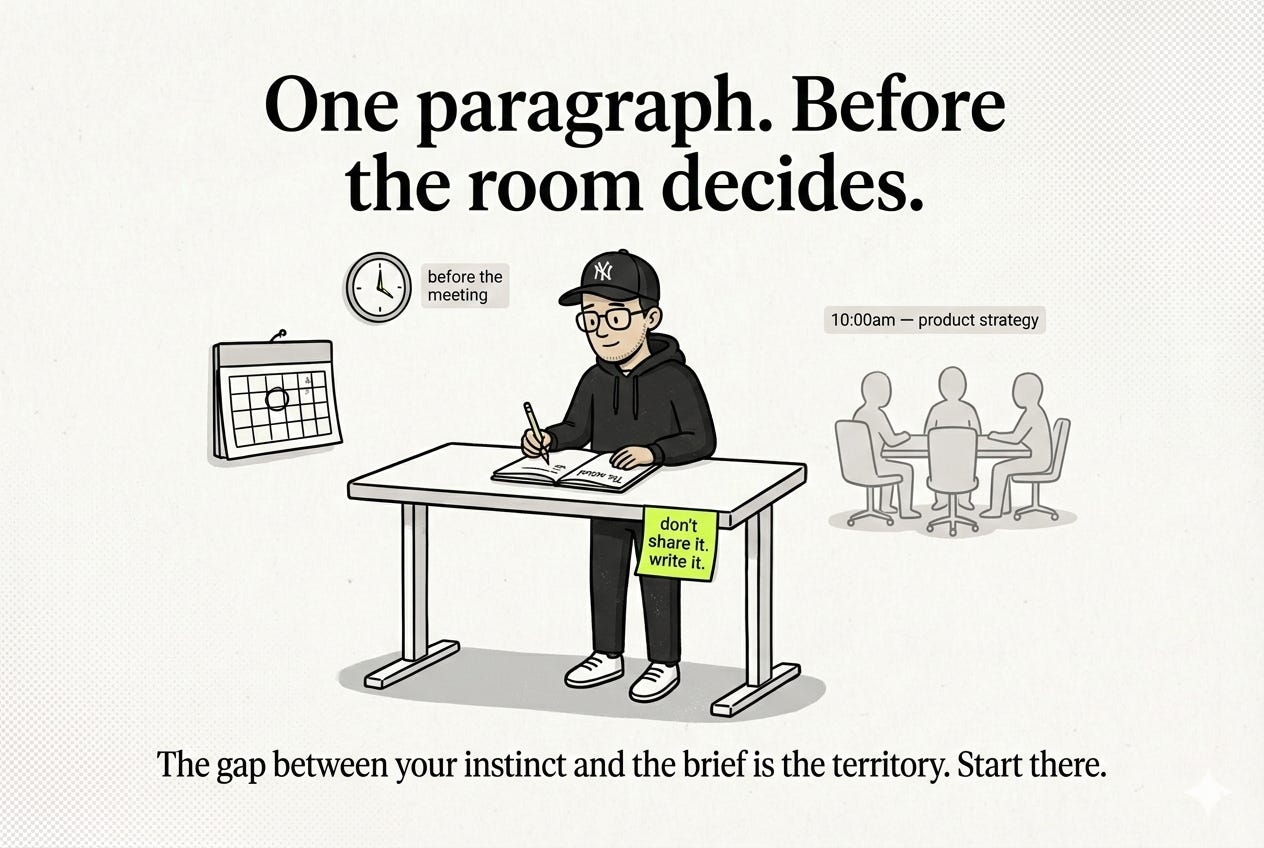
Pick one meeting in the next five days where a PM will define the problem, and you’ll respond to it. Before that meeting, write a single paragraph — just for yourself — about what you think the actual problem is and why the stated one might be incomplete.
Don’t share it unless you’re confident. But write it.
The gap between your instinct and the stated brief is the territory you haven’t been trained to navigate. Starting there — before the brief arrives — is what unshielding looks like in practice. Not a course. Not a certification. Not a new tool.
One paragraph, written in advance, that forces you to have an opinion before someone else provides one.
That’s the work. Start there.
This article draws on data from Figma’s 2026 State of the Designer, Tom Scott’s Design Hiring in 2026, Nielsen Norman Group’s State of UX 2026, Lawton Pybus at Quarter Inch Hole, and Authentic Jobs’ 2026 hiring guide. The framing of design as infrastructure draws on Jeff Gothelf’s Lean UX and Don Norman’s The Design of Everyday Things.
Follow Nurkhon for more on AI, design practice, and the skills that compound when tools get cheaper.